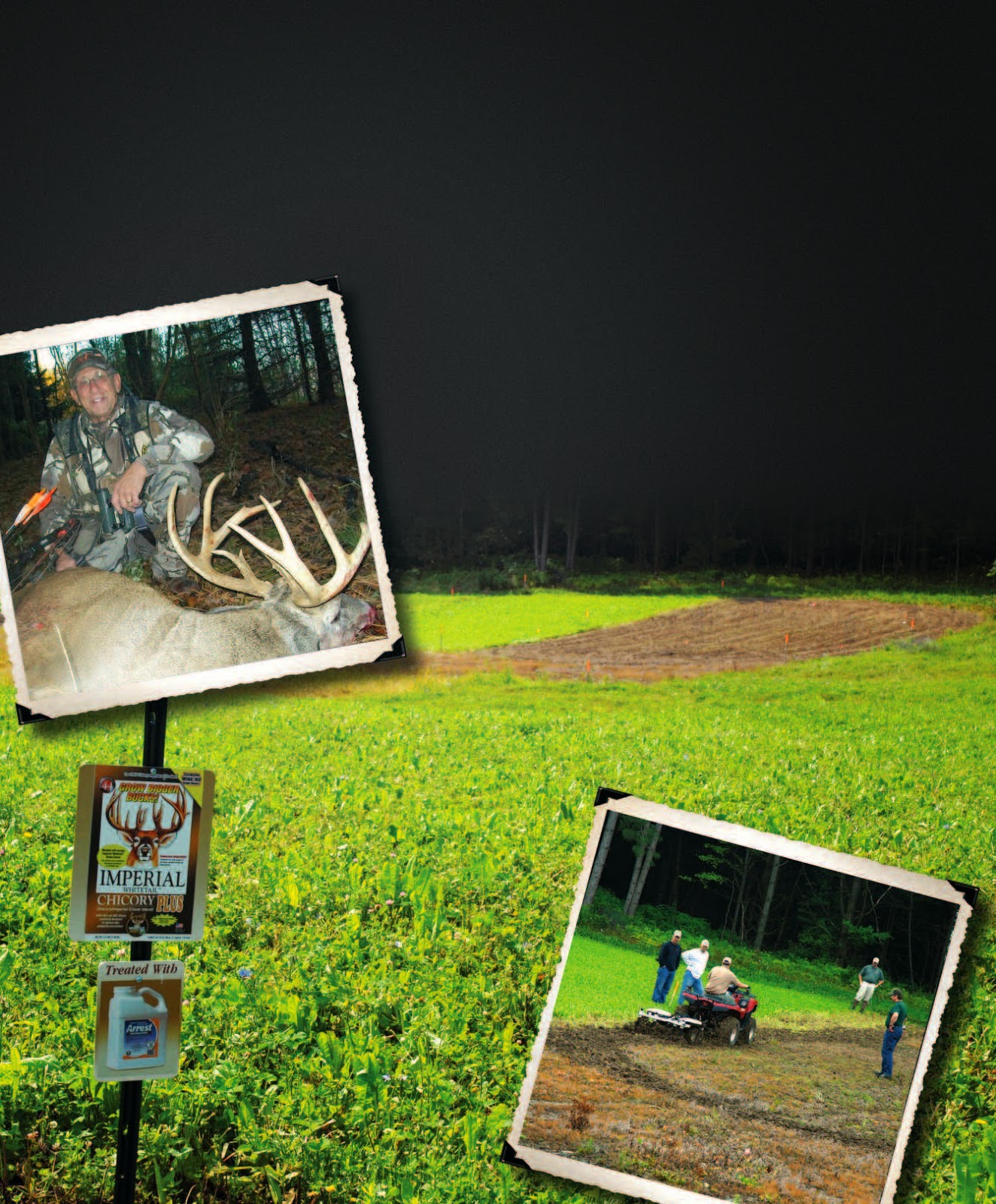
Of all Imperial Whitetail forage products, none bears a more accurate name than Extreme. That’s because it performs at the highest levels in attraction and protein content, and has the ability to thrive in optimum conditions and those that are less than perfect.
Showing posts with label Articles About Imperial Whitetail Extreme. Show all posts
Dennis Vance – Illinois
A
group of guys and I have leased this acreage for more than 15 years in
Illinois. From the start of our club we have used Imperial Whitetail Clover,
Alfa-Rack Plus, Extreme, Edge and other Whitetail Institute products almost
exclusively.
BILL KNIGHT - IOWA
My 10-year-old son Gavin has set the bar high
for all of us. During the Iowa early Muzzleloader season, he killed this buck
which gross scored 173-4/8 inches. Even more amazingly he gross scored 165
inches as a main frame 8-point.
TEXAS Extreme for Extreme Conditions
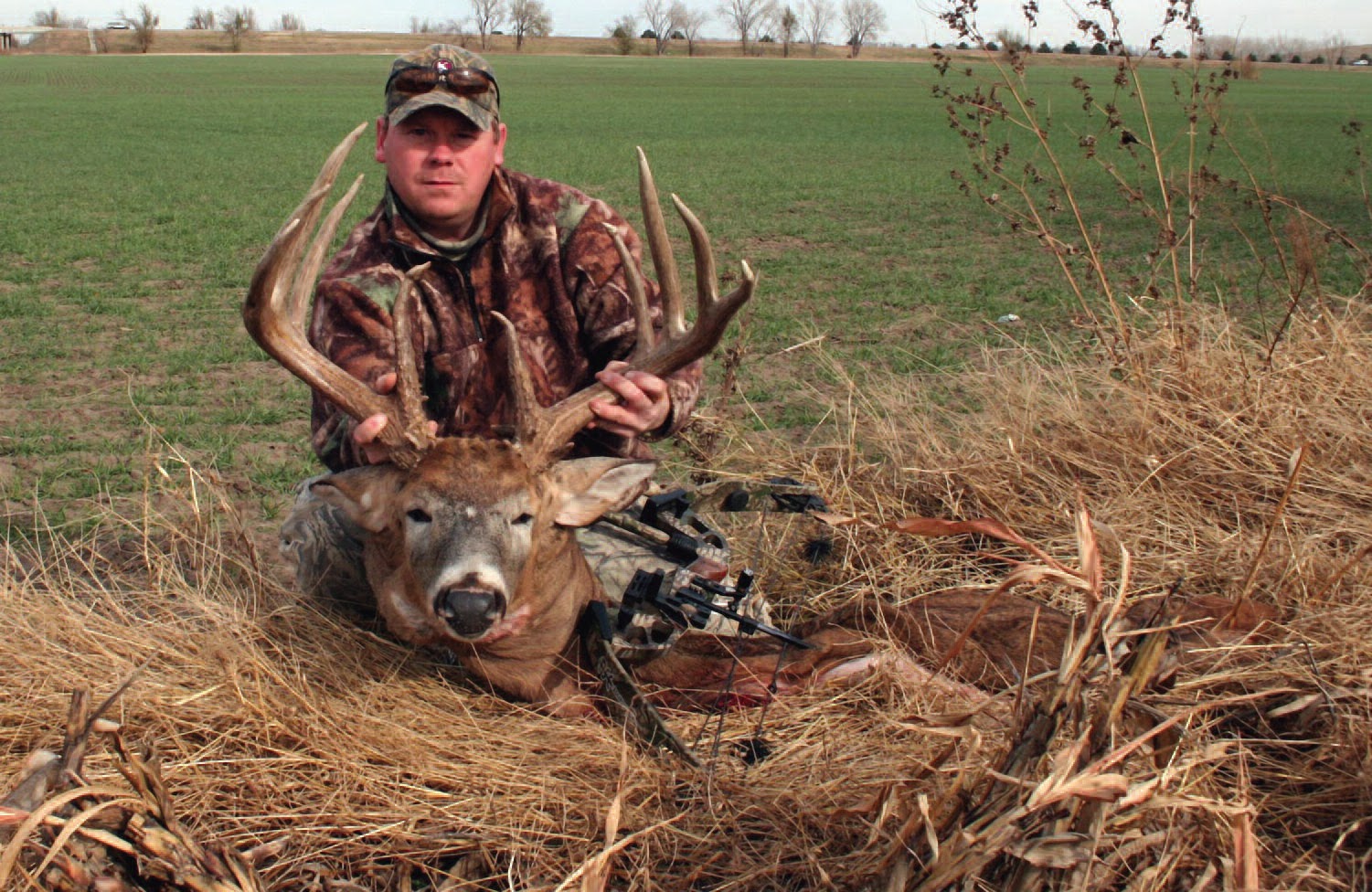
Robert Valasquez lost use of his legs about 10 years ago, but that hasn’t stopped him from pursuing his passion for hunting. The Texas hunter planted a food plot of Extreme, a Whitetail Institute perennial blend, in September in North Texas; and even though there was very little rain, the plot did well. It was this plot and Valasquez’s hunting dedication that helped him bag a very nice buck.
This Ain’t Your Granddaddy’s Greenfield
By Joe Byers
Once upon a time, your granddaddy’s rye grass
field and an old, wooden tree stand was the only game in town. He planted the
greenfield, hoping seed would sprout, the drought wouldn’t be severe, and that
the deer had nothing else to eat. Today, that kind of thinking runs like a
Model-T at Daytona. Just because your daddy or granddaddy did it, doesn’t mean it
can’t improve. Take Fred Abbas, for example, a fellow from northern Michigan
who retired with a challenging ambition to hunt trophy bucks in his home state
of Michigan. Guess what? There weren’t any.
Imperial Whitetail Extreme...Going Where No Perennial Has Gone Before
By Jon Cooner
Perhaps the most fertile source of the
Whitetail Institute’s new product ideas is its system of field testers. When
our field testers asked for a perennial food plot blend that would thrive in
harsh conditions, the Institute, as always, was listening. The result was Imperial
Whitetail Extreme. It truly goes where no other high-quality food plot perennial
has gone before.
Reclamation Food Plots How you can turn a negative into a positive.
By Bob Humphrey
![]() |
| Stock dams are another good location for reclamation plots. Just make sure your planting addresses potential erosion problems on steep slopes. |
Ed Gaw
owns a 200-acre parcel of land in western Pennsylvania. On the surface, it is
nothing special; just another patch of wooded ground, a place to hunt and spend
time outdoors. However, it overlies a formation of sedimentary rock known as
the Marcellus Shale Formation, which spans West Virginia, eastern Ohio,
southern New York and most of western and central Pennsylvania. Within the
impervious limestone beneath this formation is a reservoir of natural gas once
thought to be marginally worth the investment to recover. During the past
decade, however, geologists have significantly increased their assessments and
now estimate the formation contains enough natural gas to support the entire
United States consumption for at least two years, though estimates keep
increasing.
Extreme: Fine-Tune Your Mowing
By Jon Cooner
Like all Whitetail Institute perennials, Imperial
Whitetail Extreme is designed to attract, hold and grow bigger and better deer
for several years and from a single planting. All it takes is Mother Nature’s
cooperation and a little maintenance on your part. While the general
maintenance goals for all Whitetail Institute perennials are the same, Extreme can
benefit by fine-tuning the timing of maintenance mowing in some cases.
Kansas Hunter Finds Big Buck Success with IMPERIAL WHITETAIL CLOVER, CHICORY PLUS & EXTREME
By Dave Stuewe
I hunt a series of small family farms in northeastern Kansas. The last 10 years have brought a lot of changes to the way my family approaches deer hunting. Several years ago the deer were plentiful, and we didn’t have any problems getting access to hunting ground. Things changed the past few years, however, and seeing quality bucks and getting access to hunting land became extremely difficult.
Effects of drought challenge hunters
By David Hart
Blame it on bad luck, God’s will, or just a string of unfortunate weather patterns, but much of the United States has been ravaged by a prolonged period of drought. Reservoirs are drying up, crops refuse to grow and deer hunters are wondering what it all means.
What Whitetails Love to Eat Long-running private study reveals answer
Five years ago, I wrote an article for Whitetail News titled "The Cat’s out of the Bag." The article dealt with the forage preference study I’ve conducted at my whitetail deer behavioral research facility on our farm in western New York. At the time, the research centered on whitetails’ preferences for three forages: clover, chicory and brassica. Since then, we’ve expanded the study to include several other forages. What we’ve discovered is very interesting.
The Right 40
Many hunters wrongly believe they must own hundreds or thousands of acres of land to successfully manage whitetails, but in truth the right 40 acres or less might be better than the surrounding land combined.
It was Nov. 12, and it was cold; in fact, at 19 degrees it was the coldest morning I could remember while bow-hunting in Kansas during the past decade. Despite the time of year and perfect conditions, the local bucks were not cooperating. For nearly a week, I had been spending every hour of daylight in the woods to no avail, but I had an ace up my sleeve.
YOUR CHOICE: PLANT TO FEED OR PLANT TO KILL
BY Charles J Alsheimer
The Bible says in Galatians 6:7, “Whatever a man sows, this he will also reap.” I often find myself thinking of this verse when analyzing all that goes into the process of feeding, holding, raising and managing whitetails.
Biological Clock Governs Life and Health of Deer....And smart whitetail managers know how to keep time
Our world is changing at a pace faster than we have ever seen before. Vast improvements in science and technology have allowed us, as conservationists and outdoor enthusiasts, to manage our natural resources in ways never previously thought possible. We also have the latest-greatest camo patterns, the lightest treestands, and clothing that eliminates your scent. You can even have trail-cam pics sent directly to your cell phone or computer without ever re-entering the woods.
THE ULTIMATE SMORGASBORD PLAN A Year-Round Guide to Outstanding Whitetail Nutrition
By Brad Herndon
Several years ago I was hunting a hilly region during the late December season. The land adjacent to where I was hunting had been in corn that fall and it had been picked in late October. Ears of corn were abundant on the ground among the stalk debris, making it fairly easy for a deer to get at the high-energy food source.
Nothing But the Facts Why the Whitetail Institute is the Industry Leader
Deer nutrition remains one of the fastest-growing segments of the outdoor industry. As such, it continues to attract new players: some informed, others uninformed. To be sure you get your money’s worth, rely on Whitetail Institute products. The Institute doesn’t even have to tell you why. The facts do it for us. Ray Scott, the Institute’s founder and president, explained the philosophy on which the Institute is based.
Quality First Don't Tackle More Than You Can Handle
By Gerald Almy
Assignments are always welcomed by outdoor writers. However, I was especially thrilled when Bart Landsverk at the Whitetail Institute told me the topic of this writing project: “Don’t bite off more than you can handle.”
Pine Plantations Can Provide Productive Food Plot Opportunities
By Bob Humphrey
Pine plantations; can’t live with ’em, can’t live without ’em. To the deer hunter and manager, planted pines don’t offer a whole lot, except perhaps cover in younger-aged stands. Deer don’t eat pines, and about the only reason they travel through them is because it’s often easier than going around. Yet in many parts of the country, the Southeast in particular, planted pines dominate the landscape. They are the primary land use and management priority on what, in many cases, is the only available hunting land. It’s a dilemma for anyone who hunts deer.
Camden Hollow...A West Virginia Success Story
By John T. Travis
Camden Hollow is located in the North central portion of the great state of West Virginia. For this particular part of the state, quantity of whitetail deer is not a problem. Quality, on the other hand,is a huge problem. I bought Camden in 1993 and it was 300 acres of the wooliest deer country in the area.
Plant a Seed Make a Difference
By Brad Herndon
Ever hear of John Chapman? This name sounds familiar to many people today, but most folks can’t put their finger on who the guy really is until you say Johnny Appleseed. “Oh, yes,” they will say, “He is the guy who went throughout our country planting apple seeds that eventually grew into mature trees that produced delicious apples.”
Subscribe to:
Posts
(
Atom
)